Après avoir obtenu légalement, en 2012, un permis d’exploitation minière aurifère sur le territoire de la commune de Saül en Guyane, la société REXMA et son dirigeant, Jean-Pierre Casas ont été les cibles des lobbies écologistes.
Malgré les garanties apportées par REXMA en matière environnementale, les autorités qui avaient délivré le permis ont préféré céder à la pression écologiste. Le projet d’exploitation de la crique Limonade a dû être abandonné causant de lourdes pertes à l’entreprise et un manque à gagner pour l’économie locale. Cette affaire largement relayée - avec plus ou moins de partialité - par certains médias et réseaux sociaux, illustre le problème du développement économique en Guyane où les PME du secteur minier doivent faire face aux grands consortiums internationaux mais également - et surtout - aux tenants d’une écologie radicale.
REXMA (SAS Recherche et Exploitation minière aurifère) est une PME spécialisée dans la prospection et l’extraction d’or. Elle est établie en Guyane depuis 1998.
L’eldorado guyanais
Le continent sud-américain fait partie des plus importants bassins d’extraction d’or (plateau des Guyanes, sud-est de l’Amazonie, nord de la chaîne des Andes). Chaque année, environ 20% de la production mondiale d’or sont extraits de cet eldorado. Depuis les années 90 et la hausse importante des cours du métal jaune, la Guyane est devenue le théâtre d’une véritable ruée vers l’or. La filière de l’or est ainsi devenue le deuxième secteur économique industriel de Guyane française, derrière l’industrie spatiale. Parallèlement, le nombre des sites d’exploitation illégale a fortement augmenté. On estime que, chaque année, 8 à 10 tonnes d’or sont illégalement extraites en Guyane par les garimpeiros venus du Brésil et du Suriname.
Le potentiel aurifère guyanais attire également la convoitise de grands groupes miniers, notamment nord-américains. L’État concède à ces multinationales des zones de prospections qui peuvent dépasser les 150 km².
Entre garimpeiros clandestins et multinationales, une cinquantaine de TPE et de PME, exploitent - légalement - environ 2 tonnes d’or par an. Les TPE perpétuent une activité quasi-artisanale héritière des premiers prospecteurs du milieu du XIXème siècle. Les PME, telles que REXMA, travaillent avec des permis d’exploitation minière soumis à un cahier des charges très strict, notamment en matière d’obligations environnementales.
Fig.1 : la crique Limonade
Un permis d’exploitation délivré par l’administration française
Le 1er août 2006, le ministre de l’Économie, de l’industrie et de l’emploi, M. Éric Besson, délivre à REXMA un permis de recherche exclusive (PER) couvrant une zone d’environ 24 km² au sud du territoire de la commune de Saül.
Cette zone, traversée par la crique Limonade, est située en périphérie du futur Parc amazonien de Guyane, officiellement créé en février 2007. (Fig.1)
Le cabinet ÉCOBIOS est mandaté pour mener une étude d’impact environnemental préalable à l’obtention d’un permis d’exploitation minière (PEX). Il est à noter que le responsable de cette étude est candidat à une nomination au Conseil scientifique régional du patrimoine naturel* de Guyane qui sera créé en avril 2007. Cette candidature est évidement de nature à générer un potentiel conflit d’intérêts…
ÉCOBIOS ne remet pas son rapport à la date fixée contractuellement. Un expert-biologiste doit être missionné pour récupérer – non sans difficulté - les rapports établis par ÉCOBIOS afin d’achever le diagnostic écologique demandé par la Direction régionale de l’Industrie, de la Recherche et de l’Environnement (DRIRE).
* Arrêté N°894/2D/2B/ENV du 30 avril 2007 portant sur la création du Conseil scientifique régional du Patrimoine naturel
Le 26 octobre 2012, M. Arnaud Montebourg, ministre du Redressement productif, octroie à la société REXMA un permis d’exploitation minière (PEX), dit « permis Limonade » pour une durée de 5 ans. *
La zone d’exploitation, d’une superficie d’environ 10 km², se situe dans l’aire de libre adhésion du Parc amazonien. Dans cette zone périphérique, les activités minières sont autorisées. (Fig.2) Le Schéma départemental d’Orientation minière (SDOM) ferme finalement la zone aux exploitants miniers. Du fait de son antériorité, le PEX de REXMA reste valide. Pour débuter l’exploitation, REXMA doit encore obtenir une autorisation d’ouverture des travaux miniers (AOTM) délivrée par la préfecture.
*arrêté du 26/10/2012/ parution au J.O. du 11/12/2021
L’enfer vert n’est pas ce qu’on croit…
Malgré les garanties apportées en termes de préservation de l’environnement, le projet REXMA devient alors l’objet de critiques virulentes et d’attaques acerbes de la part des lobbies écologistes.
La zone d’exploitation n’est pas située dans le cœur du Parc amazonien de Guyane, mais le maire de Saül, qui est également président du parc, s’oppose désormais au projet REXMA en interdisant l’exploitation minière à moins de 10 km du bourg. Lettres anonymes, dénonciations calomnieuses… Jean-Pierre Casas est soupçonné - à tort - d’avoir falsifié le rapport d’étude d’impact environnemental pour obtenir un permis d’exploitation.
L’affaire REXMA est relayée, avec plus ou moins de partialité, par certains médias et réseaux sociaux. L’affaire trouve écho en métropole et au-delà. Un médiatique astrophysicien franco-canadien, devenu militant écologiste, adresse même une lettre ouverte (16/01/2013) au ministre du Redressement productif pour lui demander de s’opposer au permis minier que ce dernier a lui-même octroyé !
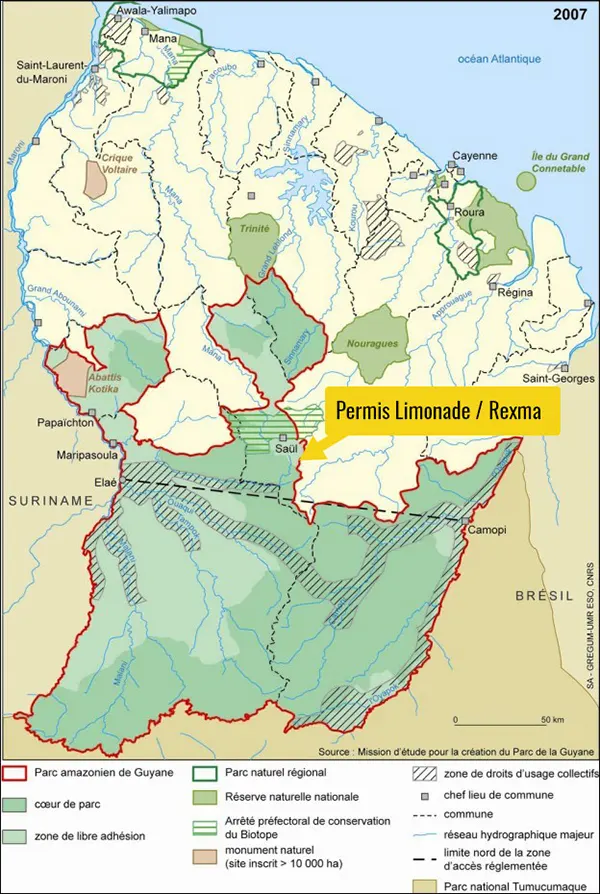 Fig. 2 : Zones protégées en Guyane et localisation du "permis Limonade" – REXMA
Le Tribunal de Cayenne a prononcé la relaxe de Jean-Pierre CASAS
La Cour d'appel de Cayenne a définitivement relaxé M. CASAS dans les affaires d'escroquerie dans lesquelles il avait été mis en cause. Aucune culpabilité n'a été retenue contre lui.
M. Jean-Pierre Casas n’a jamais été condamné au titre d’une procédure pénale jugée en Guyane. Son casier judiciaire est vierge.
L’enquête préliminaire ouverte, en 2013, pour faux et usage de faux documents prétendument versés au dossier de demande de permis minier concernant la crique Limonade (dit « PEX Limonade ») a été classée sans suite.
- - Arrêt de la Cour d’appel de Cayenne du 03/04/2014
- - Classement sans suite du 28/11/ 2014 par le procureur de la République du TGI de Cayenne
- - Jugement de Tribunal correctionnel de Cayenne du 30/01/2018
- - Arrêt de la Cour d’appel de Cayenne du 21/03/2019
Le 23 août 2013, par "prudence", le ministre Montebourg invite le préfet de Guyane à ne pas autoriser le lancement des travaux d’exploitation par REXMA.
Le 14 octobre 2015, le préfet de la Guyane, publie un arrêté rejetant l’AOTM de REXMA. L’ouverture des travaux d’exploitation est suspendue…définitivement ! Capitaux engagés dans la prospection, achat du matériel et des engins (pelles mécaniques, etc.), salaires à verser, …, REXMA qui avait déjà investi 2 millions d’euros dans son projet se retrouve en grande difficulté. Fin de l’histoire pour cette PME. Environ 70 emplois potentiels sont ainsi sacrifiés*. Des projets de développement économique local sont jetés dans les eaux troubles de la crique Limonade.
* En 2019, le taux de chômage en Guyane est de 20% (taux de chômage en métropole 8%). Ce taux atteint les 31 % chez les moins de 30 ans. (Insee 2020)
L’écologie est un enjeu réel et important. Nul ne le conteste.
Le projet minier de REXMA n’a pas été sacrifiée au nom de l’écologie. Il a été sacrifié sur l’autel du clientélisme vert. Certains politiciens capitulent devant le dogmatisme écologiste radical afin de ne pas risquer de compromettre leur avenir. Il est plus facile de désigner une petite entreprise minière comme bouc émissaire que de résoudre le problème de l’extraction illégale et ses conséquences dramatiques sur l’environnement ou de s’opposer aux puissantes multinationales.
En 2015, la PME française REXMA est contrainte d’abandonner un projet minier éco-responsable…
La même année, Emmanuel Macron, alors ministre de l’Économie, soutient le projet d’une gigantesque mine d’or à ciel ouvert*, en pleine forêt guyanaise, par le consortium russo-canadien Montagne d’Or. Le futur président déclare au journal Les Échos :« [ce projet] participe pleinement au renouveau minier de la France. » … (août 2015)
*environ 400 m de profondeur sur 3 km de long et 1 km de large
REXMA : un projet minier novateur et éco-responsable
L’objectif de REXMA était de faire du chantier d’exploitation « Limonade » un site pilote et novateur pour l’exploitation aurifère en Guyane française. (Fig.3) L'extraction d'or alluvionnaire qui consiste à extraire l'or de criques, rivières et ruisseaux est généralement considérée comme la méthode d'extraction d'or la plus respectueuse de l'environnement en raison de l'impact environnemental réduit par rapport à l'exploitation minière souterraine.
Des méthodes de séparation physique -donc non polluantes - telles que le criblage et la séparation gravimétrique sont utilisées pour séparer l'or de la fraction minérale. REXMA avait par ailleurs décidé de bannir du procédé d’exploitation l’utilisation de l’eau pour l’abattage du minerai (lance monitor), technique qui dégrade les milieux aquatiques.
Une gestion optimale de l’eau devait permettre de ne pas perturber l’écosystèmes en aval de l’exploitation.
La mise en œuvre de ces procédés d’exploitation était une première en Guyane. La société REXMA espérait ainsi faire la démonstration qu’il était possible d’exploiter les alluvions d’une manière responsable et durable.
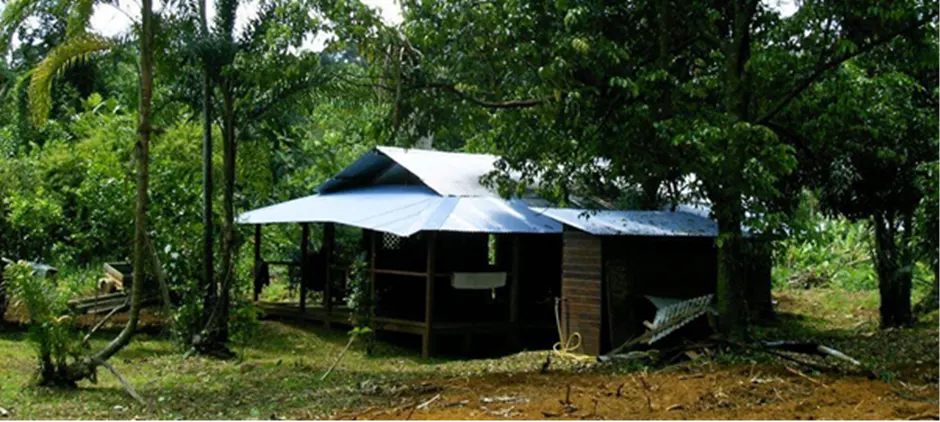 Fig.3 : le carbet REXMA à Saül, en 2010.
Grâce à la technologie de récupération du minerai, spécifiquement développée pour cette exploitation, le rendement de récupération de l’or devait attendre 80% à 90% de la ressource présente. Dans la mesure où le minerai aurait été, pour sa plus grande part, extrait du gisement, celui-ci ne ferait pas l’objet d’une reprise clandestine par les garimpeiros*.
* Suite à l’abandon du projet REXMA, la zone a finalement été illégalement exploitée par des clandestins…
Un site d’exploitation réhabilité par REXMA
À l’issue des 5 années d’exploitation autorisées, REXMA avait programmé une réhabilitation du site afin de le restituer dans un état proche de son état initial : démantèlement des installations, remodelage des terrains, réaménagement du lit de la crique, re-végétalisation des espaces déboisés et défrichés… (Fig.4)
Pour 5 années d’exploitation suivie de 2 années de suivi post-réhabilitation, REXMA devait investir un total de 4 700 000 euros participant ainsi à l’économie du territoire. Outre les travaux de réhabilitation du site, REXMA avait aussi proposé de mettre en œuvre des projets pour le développement local et l’amélioration du cadre de vie : construction d’un carbet musée consacré à l’orpaillage traditionnel en Guyane, aide à une association de protection de l’environnement, entretien des rives de la crique Limonade, installation d’un ponton de pêche, traitement d’une décharge illégale et polluante aux abords de Saül et de la crique Limonade… (Fig.5)
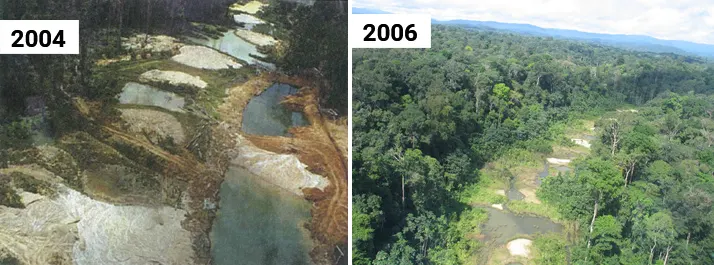 Fig.4 Revégétalisation de la crique Verdun précédemment exploitée par REXMA
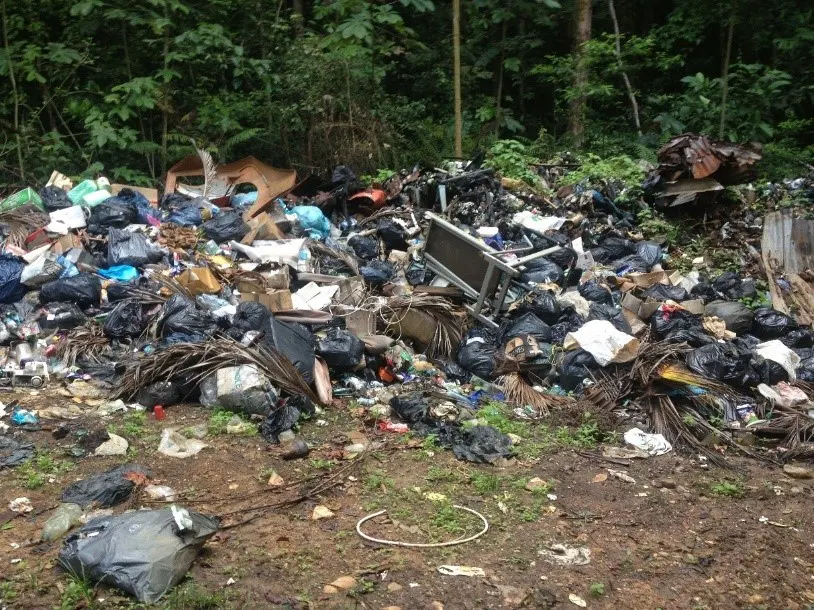 Fig. 5 : Décharge sauvage aux abords du bourg de Saül (présente avant l’arrivée de Rexma). Parmi les déchets figurent des bidons de produits toxiques pour l’environnement et les organismes aquatiques. Rexma avait proposé de mettre à disposition ses engins de chantier pour traiter ce dépôt d’ordures illégal.
Depuis 2014, Jean-Pierre CASAS préside IXI Capital, une société spécialisée dans le développement, l'exploitation et la structuration de projets miniers.
IXI Capital concentre principalement ses activités sur la filière aurifère, en intervenant sur l'ensemble de la chaîne de valeur, de l'exploitation minière jusqu'à la valorisation de la production et aux activités de négoce. Cette maîtrise des différentes étapes de la filière permet à l’entreprise de développer une approche cohérente et structurée de ses projets.
Présente en Bolivie, depuis 2002, IXI Capital s'appuie sur une stratégie fondée sur l'expertise terrain, la maîtrise opérationnelle et une vision durable de la création de valeur. La société conduit actuellement un programme d'industrialisation de plusieurs mines d'or dans la province de Caranavi, située dans le piémont amazonien. Ce programme concerne notamment les concessions Apolonia et Almeria, dont la superficie cumulée approche les 2000 hectares.
 Concession minière IXI Capital dans la province de Caranavi, Bolivie
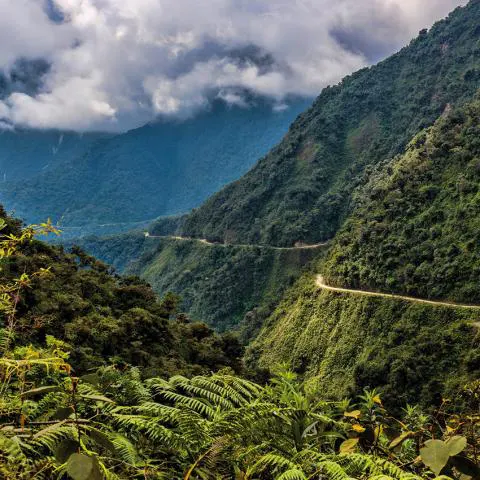 Route menant aux mines d’or IXI Capital, Bolivie - ©D.R.
Jean-Pierre Casas et IXI Capital renforcent leur présence dans le secteur minier grâce à l'acquisition de nouvelles concessions autorisées par l'État bolivien. Parallèlement, l'entreprise élargit progressivement son périmètre d'activité vers l'exploitation des terres rares, renforçant ainsi sa présence sur des ressources à forte valeur stratégique. Cette diversification s'inscrit dans un contexte marqué par un potentiel de croissance important et une demande internationale en constante progression.
Au-delà de ses activités d'exploitation, IXI Capital développe également des solutions technologiques destinées à répondre aux enjeux environnementaux liés à l'industrie minière et à l'exploitation des mines d'or. Cette démarche traduit la volonté de l'entreprise d'intégrer les enjeux environnementaux à ses projets tout en accompagnant l'évolution des pratiques du secteur.
L'ensemble des initiatives portées par IXI Capital et Jean-Pierre Casas repose sur une approche qui associe les dimensions économiques, sociales et environnementales. L'entreprise accompagne ainsi des projets à forte valeur ajoutée en inscrivant ces trois piliers au cœur de sa stratégie de développement.
Jean-Pierre Casas dirige IXI Capital avec une vision de long terme fondée sur l'innovation, la diversification et la recherche d'un impact durable. Son ambition est de concilier performance industrielle, responsabilité environnementale et contribution concrète au développement local.
Cette orientation stratégique s'appuie sur une gestion rigoureuse des opérations, une prise en compte constante des enjeux économiques, sociaux et environnementaux, ainsi que sur la construction de partenariats durables, constituant les fondements du développement d'IXI Capital.
Fort de plus de quarante ans d'expérience en gestion d'entreprise, Jean-Pierre Casas a construit un parcours entrepreneurial associant développement industriel, expertise minière et vision internationale. Son expérience s'est forgée au sein des secteurs du commerce, des équipements pour les travaux publics et de l'exploitation minière, avant de s'étendre à la Bolivie à partir de 2002, un pays dans lequel il a conduit une part essentielle de son activité professionnelle.
Après dix-sept années à la direction d'activités dédiées à la distribution de matériels de travaux publics et à l'industrie minière, il s'oriente vers l'exploitation aurifère. Dès 1996, il développe plusieurs exploitations de mines d'or en Guyane française, tout en créant à Cayenne la société REXEA, spécialisée dans la distribution d'équipements miniers.
L’engagement de Jean-Pierre Casas en Bolivie se concrétise par la création de REXMA Bolivia, exploitant de plusieurs concessions minières situées près de Caranavi. De 1998 à 2017, Jean-Pierre Casas assure la présidence du groupe REXMA avant d'engager, à partir de 2014, une nouvelle phase de développement avec IXI Capital Inversiones SA Bolivia Holding et ses filiales. Cette organisation accompagne l'industrialisation de projets miniers tout en développant des activités de négoce de l'or et es solutions technologiques conçues pour réduire l'empreinte environnementale des opérations minières grâce à des approches innovantes en microbiologie appliquée et en gestion durable des ressources en eau.
Aujourd’hui, Jean-Pierre Casas à la tête d’IXI Capital poursuit une stratégie fondée sur la diversification, la maîtrise opérationnelle et une approche responsable du développement industriel. Convaincu que la performance économique s'inscrit durablement dans son environnement, il veille à intégrer les dimensions sociales et environnementales à ses projets. Cette vision s'est notamment traduite par la création de la Fondation Maria Apolonia, dédiée au bien-être des enfants et à l'éducation des communautés riveraines des zones minières.
Jean-Pierre Casas a fondé et finance depuis 2009 la Fondation Maria Apolonia, expression de son engagement en faveur d'un développement responsable conciliant création d'emplois, développement local et prise en compte des enjeux sociaux et environnementaux. La fondation agit en faveur de l'éducation, de la santé, de l'amélioration des conditions de vie des communautés riveraines des zones minières ainsi que de la lutte contre les violences faites aux enfants.
Ancien handballeur de haut niveau, Jean-Pierre Casas a été pendant cinq ans le principal sponsor du club de handball HBCVenissieux 85. À son grand regret, lorsqu’il a dû arrêter son support financier, le cofinanceur n’a pas partiellement compensé… Il conserve de son parcours sportif le goût du défi, une culture du collectif et un sens aigu des responsabilités envers ses partenaires, ainsi qu'une capacité éprouvée à surmonter les difficultés et à honorer pleinement ses obligations. Des valeurs qui continuent aujourd'hui d'accompagner sa vision entrepreneuriale et le développement d'IXI Capital.
Président d'IXI Capital et créateur de la fondation Maria Apolonia, Jean-Pierre Casas est convaincu que le développement économique doit s'accompagner d'un engagement humain. Au-delà de son activité dans le secteur minier, il mène des actions philanthropiques destinées à améliorer durablement les conditions de vie des communautés vivant à proximité des mines d'or.
Pour Jean-Pierre Casas, il est inconcevable de rester simple témoin de la pauvreté qui touche ces populations. À travers la fondation Maria Apolonia, de nombreuses initiatives concrètes ont ainsi vu le jour afin de répondre aux besoins essentiels des habitants.
Les actions menées concernent d'abord les infrastructures. Jean-pierre Casas et la Fondation Maria Apolonia ont notamment apporté un soutien financier à la construction d'un pont permettant aux enfants de rejoindre leur école en toute sécurité. Auparavant les écoliers devaient traverser une rivière en radeau… La fondation assure également l'entretien régulier des routes reliant les différentes communautés, facilitant les déplacements, les échanges et le maintien du lien social. Un accompagnement est aussi apporté aux familles et aux personnes âgées, notamment par la construction de petites maisons destinées à améliorer leurs conditions de vie.
La santé constitue un autre axe majeur de son engagement, avec une contribution à la construction d'un centre de santé destiné à renforcer l'accès aux soins des populations locales.
L'éducation occupe également une place essentielle dans les actions de la fondation. Celle-ci finance des dons de fournitures et de matériel scolaire ainsi que des emplois d'instituteur. Un projet de construction d'une aire de jeux couverte est également prévu afin d'offrir aux enfants un espace adapté à leurs activités.
Soucieux de concilier développement économique et préservation de l'environnement, Jean-Pierre Casas et la fondation Maria Apolonia préparent la création d'une coopérative de collecte et de valorisation du bois mort destiné à une société de production de granulés de bois. Dans un pays dont les forêts représentent environ 10 % de la surface du bassin amazonien, cette démarche contribue à préserver les ressources forestières. La préservation d'un hectare de forêt permet de conserver près de 700 m³ d'eau par an, soit l'équivalent de la consommation annuelle d'une famille. La fondation prévoit également de mettre en place une gestion des forêts locales.
Parallèlement, un programme d'actions de prévention et de lutte contre les violences faites aux enfants est en préparation, témoignant de la volonté de la fondation Maria Apolonia et de Jean-Pierre Casas d'agir sur l'ensemble des enjeux sociaux auxquels sont confrontées les communautés.
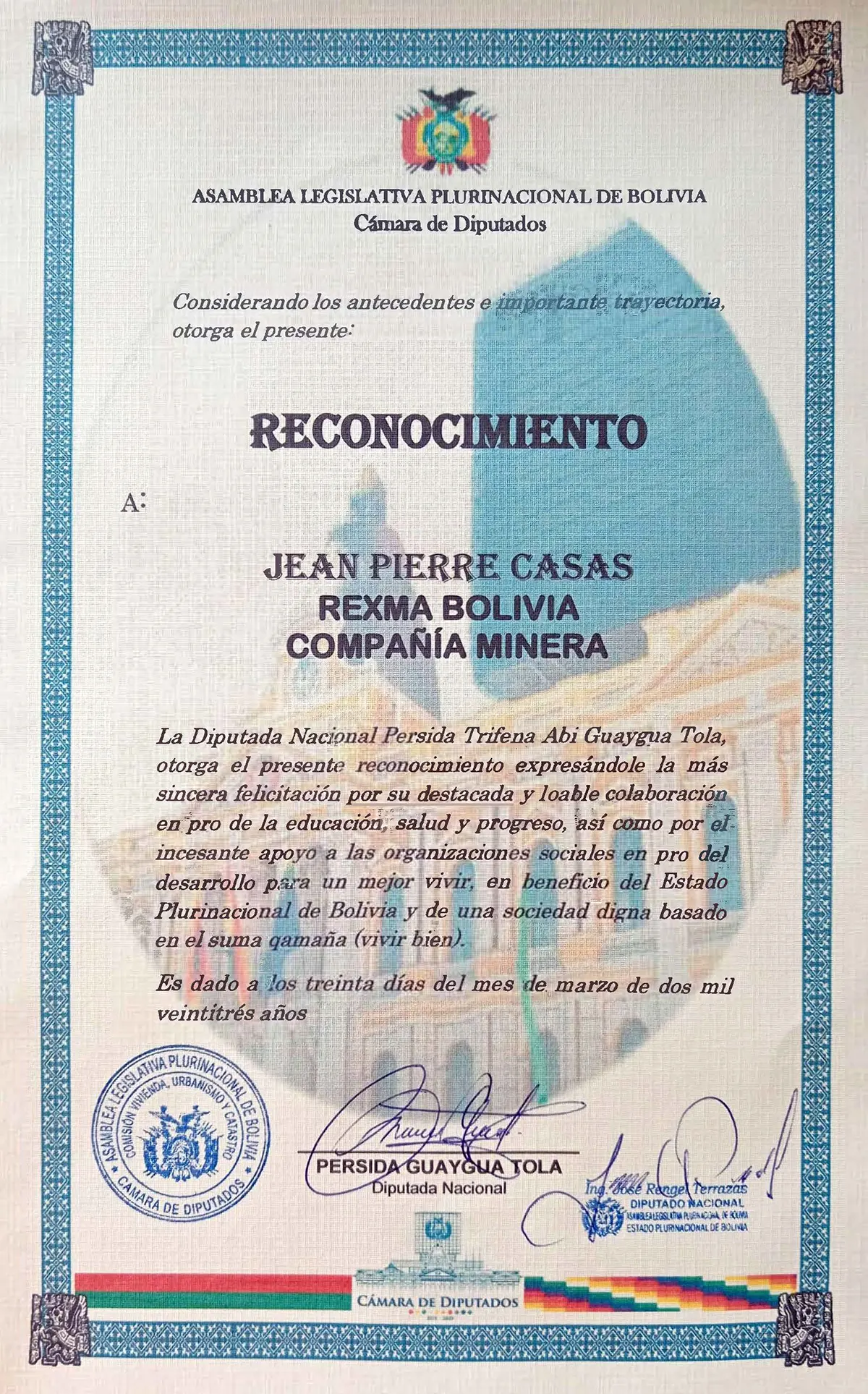 Témoignage de reconnaissance, décerné à J-P Casas par la Chambre des députés de Bolivie (2023)
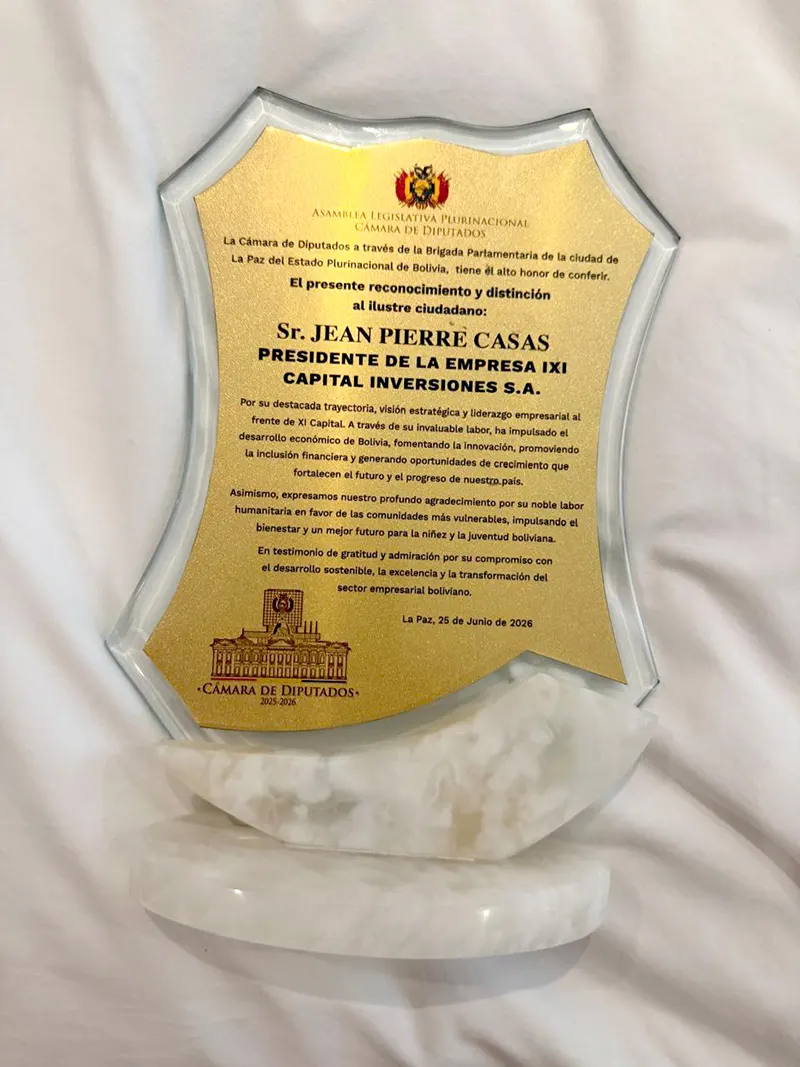 Trophée d’honneur remis, à Jean-Pierre CASAS par la Chambre des députés de Bolivie (2026)
Au-delà de sa contribution au développement économique du pays, l'engagement philanthropique de Jean-Pierre Casas en Bolivie a été reconnu et salué par la Chambre des députés du pays, soulignant l'impact concret de ses actions en faveur des populations locales.