After legally obtaining a gold mining exploitation permit in 2012 over the territory of the commune of Saül in French Guiana, the company REXMA and its head, Jean-Pierre Casas, became targets of environmentalist lobbies.
Despite the environmental guarantees REXMA provided, the authorities that had issued the permit chose to yield to environmental pressure. The Limonade creek exploitation project had to be abandoned, causing heavy losses for the company and lost economic opportunity for the local area. This affair, widely covered — with varying degrees of bias — by certain media and social networks, illustrates the challenge of economic development in French Guiana, where mining SMEs must contend with large international consortiums but above all with proponents of radical environmentalism.
REXMA (SAS Recherche et Exploitation Minière Aurifère) is an SME specializing in gold prospecting and extraction. It has operated in French Guiana since 1998.
The Guianese Eldorado
The South American continent is one of the world's most important gold-mining basins (the Guiana Shield, southeastern Amazonia, the northern Andes). Roughly 20% of global gold production is extracted from this Eldorado each year. Since the 1990s and the significant rise in gold prices, French Guiana has become the site of a genuine gold rush. The gold industry has thus become the second-largest industrial economic sector in French Guiana, behind the space industry. At the same time, the number of illegal mining sites has risen sharply. It is estimated that 8 to 10 tonnes of gold are illegally extracted each year in French Guiana by garimpeiros coming from Brazil and Suriname.
French Guiana's gold potential also attracts the interest of major mining groups, particularly North American ones. The State grants these multinationals prospecting zones that can exceed 150 km².
Between clandestine garimpeiros and multinationals, around fifty very small and small businesses legally extract about 2 tonnes of gold per year. The smallest operators carry on an almost artisanal activity inherited from the first prospectors of the mid-19th century. SMEs such as REXMA operate under exploitation permits subject to very strict specifications, particularly regarding environmental obligations.
Fig. 1: The Limonade creek
A Mining Permit Issued by the French Administration
On August 1, 2006, the Minister of the Economy, Industry and Employment, Mr. Éric Besson, issued REXMA an exclusive exploration permit (PER) covering an area of approximately 24 km² south of the commune of Saül.
This zone, crossed by the Limonade creek, is located on the edge of the future Amazonian Park of French Guiana, officially created in February 2007. (Fig. 1)
The firm ÉCOBIOS was commissioned to conduct an environmental impact study, a prerequisite for obtaining a mining exploitation permit (PEX). It should be noted that the person responsible for this study was a candidate for appointment to the Regional Scientific Council for Natural Heritage* of French Guiana, which would be created in April 2007. This candidacy naturally created a potential conflict of interest…
ÉCOBIOS did not submit its report by the contractually set deadline. An expert biologist had to be brought in to retrieve — not without difficulty — the reports prepared by ÉCOBIOS in order to complete the ecological assessment requested by the Regional Directorate for Industry, Research and the Environment (DRIRE).
* Decree No. 894/2D/2B/ENV of April 30, 2007 establishing the Regional Scientific Council for Natural Heritage
On October 26, 2012, Mr. Arnaud Montebourg, Minister for Industrial Renewal, granted REXMA a mining exploitation permit (PEX), known as the "Limonade permit," for a period of 5 years.*
The exploitation zone, covering approximately 10 km², is located within the Amazonian Park's zone of free adherence. In this peripheral zone, mining activities are authorized. (Fig. 2) The Departmental Mining Planning Scheme (SDOM) subsequently closed the zone to mining operators. Due to its precedence, REXMA's PEX remained valid. To begin operations, REXMA still needed to obtain authorization to open mining works (AOTM), issued by the Prefecture.
*Decree of 10/26/2012, published in the Official Journal on 12/11/2021
The Green Hell Is Not What You Think…
Despite the environmental safeguards provided, the REXMA project became the target of harsh criticism and fierce attacks from environmentalist lobbies.
The exploitation zone was not located within the core of the Amazonian Park of French Guiana, but the mayor of Saül, who is also president of the park, opposed the REXMA project by banning mining activity within 10 km of the town. Anonymous letters, slanderous accusations… Jean-Pierre Casas was wrongly suspected of falsifying the environmental impact study report in order to obtain an exploitation permit.
The REXMA affair was covered, with varying degrees of bias, by certain media and social networks. The case echoed in mainland France and beyond. A well-known French-Canadian astrophysicist turned environmental activist even sent an open letter (January 16, 2013) to the Minister for Industrial Renewal asking him to oppose the mining permit that he himself had granted!
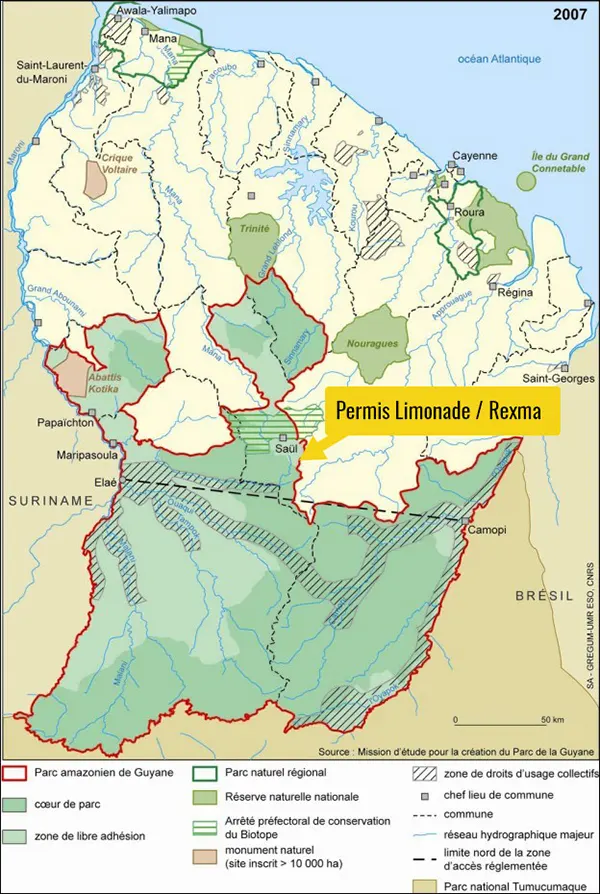 Fig. 2: Protected areas in French Guiana and location of the REXMA "Limonade permit"
The Cayenne Court Ruled to Acquit Jean-Pierre CASAS
The Cayenne Court of Appeal definitively acquitted Mr. CASAS in the fraud cases in which he had been implicated. No guilt was found against him.
Mr. Jean-Pierre Casas has never been convicted under any criminal proceeding tried in French Guiana. His criminal record is clean.
The preliminary investigation opened in 2013 into alleged forgery and use of forged documents supposedly submitted in the application for the mining permit concerning the Limonade creek ("PEX Limonade") was closed without further action.
- - Ruling of the Cayenne Court of Appeal, 04/03/2014
- - Case closed without further action by the Public Prosecutor of the Cayenne Regional Court, 11/28/2014
- - Judgment of the Cayenne Criminal Court, 01/30/2018
- - Ruling of the Cayenne Court of Appeal, 03/21/2019
On August 23, 2013, "as a precaution," Minister Montebourg asked the Prefect of French Guiana not to authorize REXMA to begin its mining operations.
On October 14, 2015, the Prefect of French Guiana issued a decree rejecting REXMA's AOTM application. The opening of mining operations was suspended… permanently! Capital committed to prospecting, purchase of equipment and machinery (mechanical shovels, etc.), wages to be paid — REXMA, which had already invested 2 million euros in the project, found itself in serious difficulty. The end of the road for this SME. Around 70 potential jobs were thus sacrificed.* Local economic development projects were cast into the murky waters of the Limonade creek.
* In 2019, the unemployment rate in French Guiana stood at 20% (compared with 8% in mainland France). This rate reached 31% among those under 30. (INSEE, 2020)
The environment is a real and important issue. No one disputes that.
REXMA's mining project was not sacrificed in the name of the environment. It was sacrificed on the altar of green clientelism. Some politicians capitulate to radical environmentalist dogmatism in order to avoid jeopardizing their own future. It is easier to make a small mining company a scapegoat than to solve the problem of illegal mining and its dramatic environmental consequences, or to stand up to powerful multinationals.
In 2015, the French SME REXMA was forced to abandon an environmentally responsible mining project…
That same year, Emmanuel Macron, then Minister of the Economy, backed the project for a huge open-pit gold mine* deep in the Guianese forest, run by the Russian-Canadian consortium Montagne d'Or. The future president told the newspaper Les Échos that the project would contribute fully to France's mining revival (August 2015).
*approximately 400 m deep, 3 km long and 1 km wide
REXMA: An Innovative and Environmentally Responsible
Mining Project REXMA's objective was to turn the "Limonade" exploitation site into a pilot and innovative project for gold mining in French Guiana. (Fig. 3) Alluvial gold extraction, which consists of extracting gold from creeks, rivers and streams, is generally considered the most environmentally friendly gold extraction method, owing to its reduced environmental impact compared with underground mining.
Non-polluting physical separation methods, such as screening and gravity separation, were used to separate gold from the mineral fraction. REXMA had also decided to ban the use of water for ore breaking (monitor lancing), a technique that degrades aquatic environments, from its extraction process.
Optimal water management was intended to avoid disrupting ecosystems downstream of the operation.
The implementation of these extraction methods would have been a first in French Guiana. REXMA hoped to demonstrate that it was possible to mine alluvial deposits responsibly and sustainably.
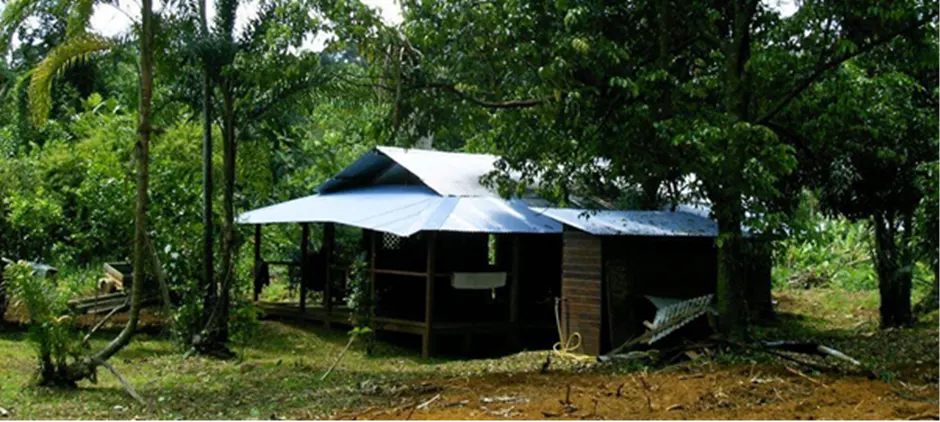 Fig. 3: The REXMA carbet (shelter) at Saül, in 2010.
Thanks to ore recovery technology developed specifically for this operation, gold recovery yield was expected to reach 80% to 90% of the resource present. Since most of the ore would have already been extracted from the deposit, it would not have been subject to clandestine reworking by garimpeiros.*
*Following the abandonment of the REXMA project, the zone was ultimately illegally exploited by clandestine miners…
A Site Rehabilitated by REXMA
At the end of the 5 authorized years of operation, REXMA had planned to rehabilitate the site to restore it to a state close to its original condition: dismantling installations, reshaping the land, restoring the creek bed, revegetating cleared and deforested areas… (Fig. 4)
Over 5 years of operation followed by 2 years of post-rehabilitation monitoring, REXMA was set to invest a total of 4,700,000 euros, contributing to the local economy. Beyond site rehabilitation work, REXMA had also proposed local development and quality-of-life projects: building a museum-carbet dedicated to traditional gold panning in French Guiana, supporting an environmental protection association, maintaining the banks of the Limonade creek, installing a fishing pier, and clearing an illegal and polluting dump near Saül and the Limonade creek… (Fig. 5)
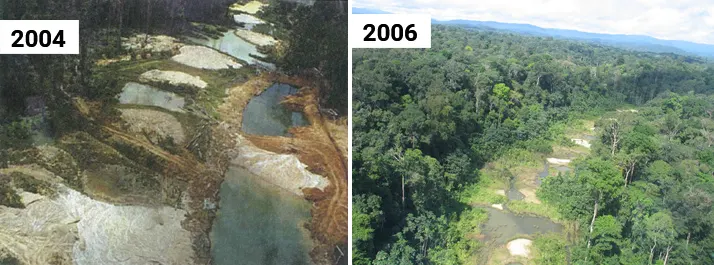 Fig. 4: Revegetation of the Verdun creek, previously mined by REXMA
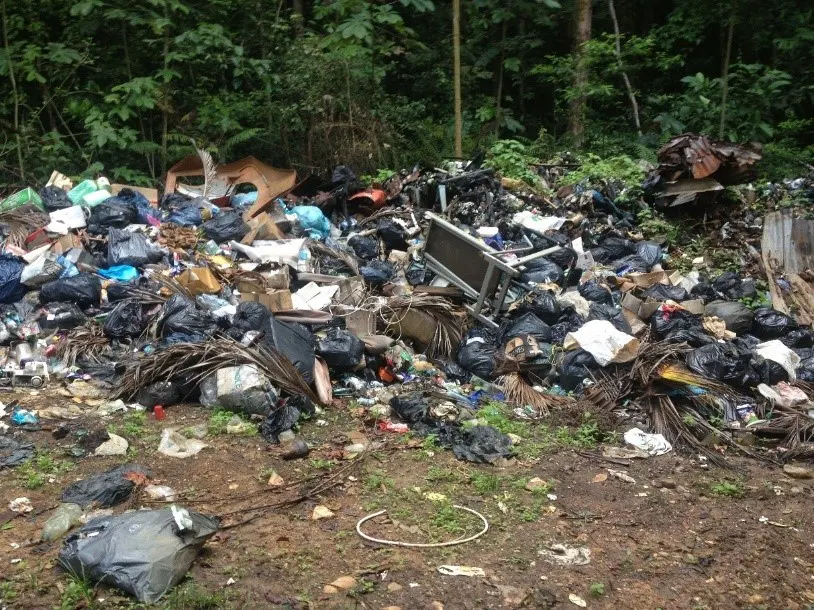 Fig. 5: Illegal dump near the town of Saül (present before REXMA's arrival). The waste included containers of products toxic to the environment and aquatic organisms. REXMA had offered to make its construction equipment available to clear this illegal dumping site.
Since 2014, Jean-Pierre CASAS has been President of IXI Capital, a company specializing in the development, operation and structuring of mining projects.
IXI Capital focuses mainly on the gold sector, operating across the entire value chain, from mining operations to production valorization and trading activities. This command of the different stages of the value chain allows the company to develop a coherent and structured approach to its projects.
Present in Bolivia since 2002, IXI Capital's strategy is built on field expertise, operational control and a sustainable vision of value creation. The company is currently carrying out an industrialization program for several gold mines in the province of Caranavi, located in the Amazonian foothills. This program covers in particular the Apolonia and Almeria concessions, whose combined area is close to 2,000 hectares.
 IXI Capital mining concession in the province of Caranavi, Bolivia
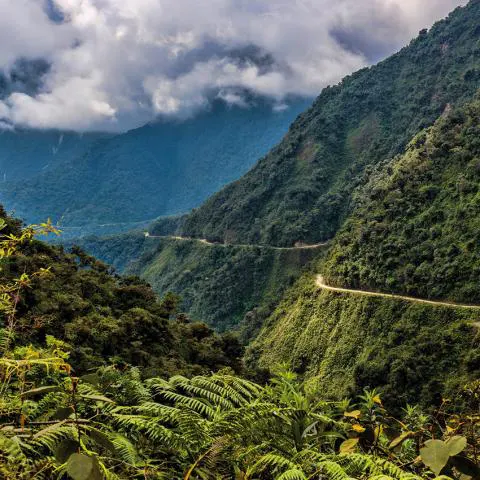 Road leading to the IXI Capital gold mines, Bolivia — © All rights reserved
Jean-Pierre Casas and IXI Capital are strengthening their presence in the mining sector through the acquisition of new concessions authorized by the Bolivian State. At the same time, the company is gradually expanding its scope of activity into rare earth extraction, reinforcing its presence in resources of high strategic value. This diversification takes place in a context marked by significant growth potential and steadily rising international demand.
Beyond its mining operations, IXI Capital also develops technological solutions aimed at addressing the environmental challenges linked to the mining industry and gold mine operations. This reflects the company's commitment to integrating environmental concerns into its projects while supporting the evolution of industry practices.
All of the initiatives carried out by IXI Capital and Jean-Pierre Casas are based on an approach combining economic, social and environmental dimensions. The company supports high-value-added projects by placing these three pillars at the heart of its development strategy.
Jean-Pierre Casas leads IXI Capital with a long-term vision founded on innovation, diversification and the pursuit of lasting impact. His ambition is to reconcile industrial performance, environmental responsibility and concrete contribution to local development.
This strategic direction relies on rigorous operational management, ongoing consideration of economic, social and environmental issues, and the building of lasting partnerships — the foundations of IXI Capital's development.
With more than forty years of business management experience, Jean-Pierre Casas has built an entrepreneurial career combining industrial development, mining expertise and an international outlook. His experience was forged in the trade, public works equipment and mining sectors, before extending to Bolivia starting in 2002, a country where he has carried out a major part of his professional activity.
After seventeen years leading businesses dedicated to distributing public works equipment and serving the mining industry, he moved into gold mining. Starting in 1996, he developed several gold mining operations in French Guiana while founding REXEA in Cayenne, a company specializing in the distribution of mining equipment.
Jean-Pierre Casas's commitment to Bolivia took shape with the creation of REXMA Bolivia, which operates several mining concessions near Caranavi. From 1998 to 2017, Jean-Pierre Casas served as chairman of the REXMA group before launching, from 2014 onward, a new phase of development with IXI Capital Inversiones SA Bolivia Holding and its subsidiaries. This organization supports the industrialization of mining projects while developing gold trading activities and technological solutions designed to reduce the environmental footprint of mining operations, through innovative approaches in applied microbiology and sustainable water resource management.
Today, at the helm of IXI Capital, Jean-Pierre Casas pursues a strategy based on diversification, operational control and a responsible approach to industrial development. Convinced that economic performance must be sustainable within its environment, he ensures that social and environmental dimensions are integrated into his projects. This vision is notably reflected in the creation of the Maria Apolonia Foundation, dedicated to children's wellbeing and the education of communities living near mining areas.
Jean-Pierre Casas founded and has funded the Maria Apolonia Foundation since 2009, an expression of his commitment to responsible development that reconciles job creation, local development and attention to social and environmental issues. The foundation works in education, health, improving the living conditions of communities near mining areas, and combating violence against children.
A former high-level handball player, Jean-Pierre Casas was the main sponsor of the handball club HBC Vénissieux 85 for five years. To his great regret, when he had to end his financial support, the co-funder did not partially make up for it… From his sporting background he retains a taste for challenge, a culture of teamwork and a strong sense of responsibility toward his partners, as well as a proven ability to overcome difficulties and fully honor his commitments. These are values that continue to guide his entrepreneurial vision and the development of IXI Capital today.
President of IXI Capital and founder of the Maria Apolonia Foundation, Jean-Pierre Casas believes that economic development must go hand in hand with human commitment. Beyond his mining activities, he carries out philanthropic work aimed at sustainably improving the living conditions of communities near the gold mines.
For Jean-Pierre Casas, it is unthinkable to remain a mere bystander to the poverty affecting these populations. Through the Maria Apolonia Foundation, numerous concrete initiatives have been launched to meet residents' essential needs.
These actions concern infrastructure first and foremost. Jean-Pierre Casas and the Maria Apolonia Foundation notably provided financial support for the construction of a bridge allowing children to safely reach their school. Previously, schoolchildren had to cross a river by raft… The foundation also carries out regular maintenance of the roads connecting the various communities, facilitating travel, exchange and social ties. Support is also provided to families and the elderly, in particular through the construction of small houses aimed at improving their living conditions.
Health is another major focus of his commitment, with a contribution to building a health center intended to improve local populations' access to care.
Education also plays a central role in the foundation's work. It funds donations of school supplies and materials, as well as teaching positions. A covered playground project is also planned, to give children a space suited to their activities.
Committed to reconciling economic development with environmental preservation, Jean-Pierre Casas and the Maria Apolonia Foundation are preparing to set up a cooperative for collecting and processing dead wood for a wood pellet production company. In a country whose forests represent around 10% of the Amazon basin's surface area, this initiative helps preserve forest resources. Preserving one hectare of forest conserves nearly 700 m³ of water per year, equivalent to a family's annual consumption. The foundation also plans to implement local forest management.
At the same time, a program of prevention and action against violence toward children is being prepared, reflecting the determination of the Maria Apolonia Foundation and Jean-Pierre Casas to address the full range of social issues facing these communities.
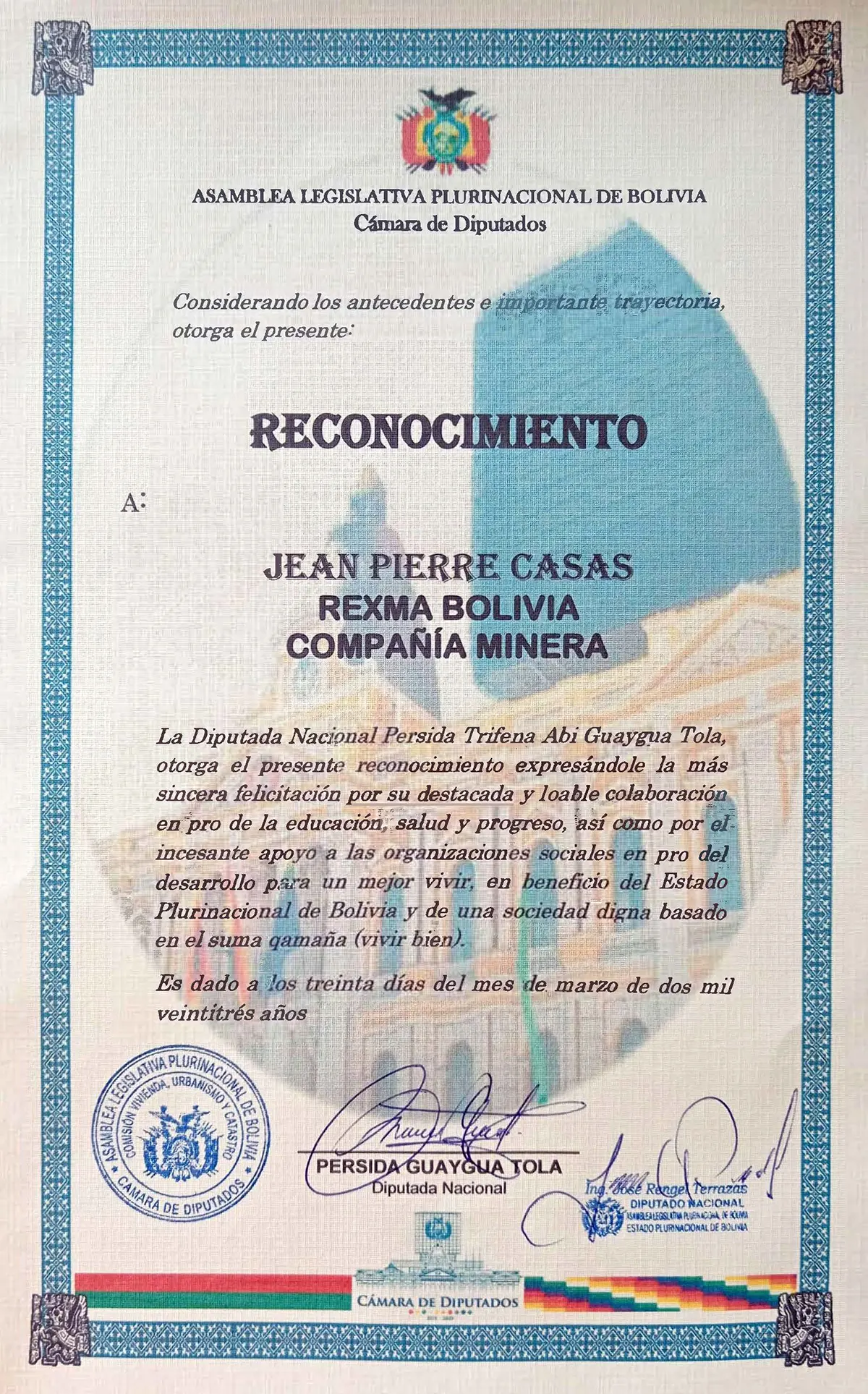 Certificate of recognition awarded to J-P Casas by the Bolivian Chamber of Deputies (2023)
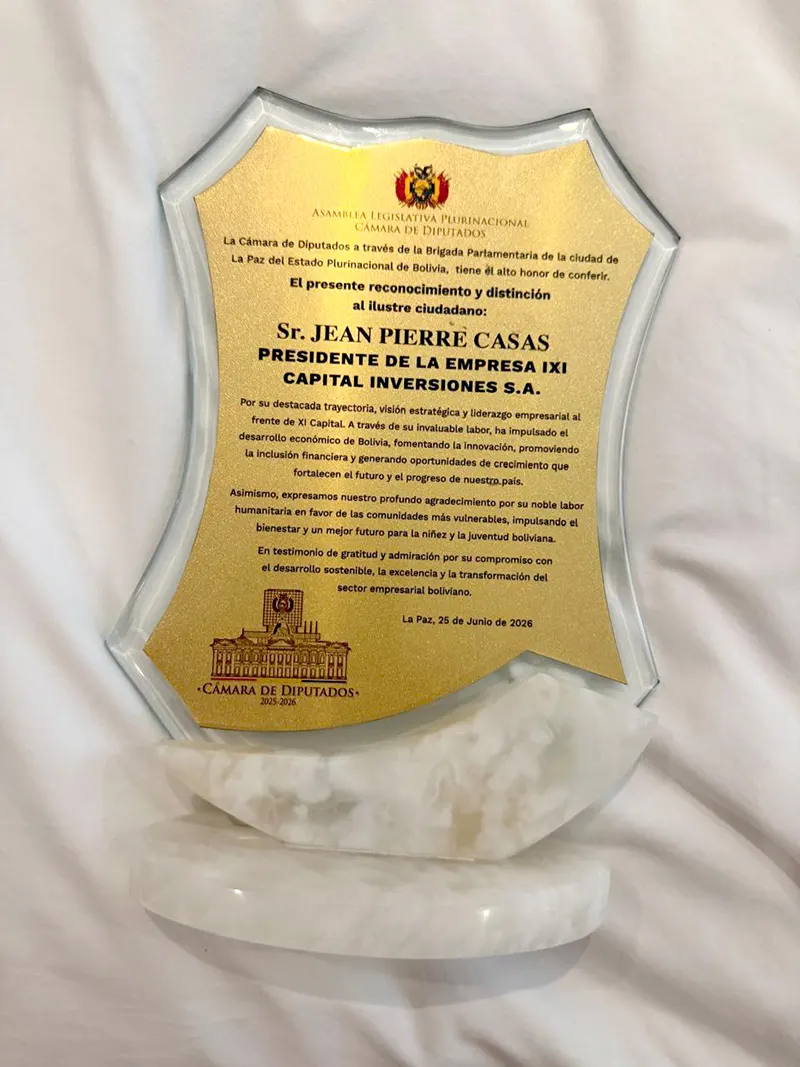 Honorary trophy presented to Jean-Pierre CASAS by the Bolivian Chamber of Deputies (2026)
Beyond his contribution to the country's economic development, Jean-Pierre Casas's philanthropic commitment in Bolivia has been recognized and praised by the country's Chamber of Deputies, underscoring the concrete impact of his actions on behalf of local populations.